发布:2026-04-14 浏览:0
警惕!森林资源评估避坑:表面枝繁叶茂,实则暗藏“空心陷阱”,交易前必看森林资源资产评估是林地交易、管护、处置的核心前提,直接决定林地所有者的切身利益,但行业内隐藏着一个致命陷阱:不少看似枝繁叶茂的“优质林地资产”,实则内部早已壁腐、空心,成为看似值钱、实则亏损的“垃圾袋”。据行业调研数据显示,我国林地交易中,因未提前检测发现壁腐、空心树问题,导致买家亏损的案例占比达38%,其中空心树混杂率超40%的林地,采伐后实际价值较评估值缩水50%以上,管护、采伐成本飙升,不少从业者因忽视前期检测,陷入“高价买废林”的困境。今天,结合森林资源资产评估实操痛点,详解林木内部隐患的危害、检测方法及避坑要点,助力从业者守住资产安全,避免签署“赔钱协议”。
be vigilant! Avoiding pitfalls in forest resource assessment: Although the surface is lush with branches and leaves, there are hidden "hollow traps". Forest resource asset assessment is the core prerequisite for forest land trading, management, and disposal, which directly determines the vital interests of forest land owners. However, there is a fatal trap hidden in the industry: many seemingly lush "high-quality forest land assets" have already decayed and become "garbage bags" that appear valuable but actually lose money internally. According to industry research data, in China's forest land transactions, 38% of cases result in losses for buyers due to the failure to detect wall rot and hollow tree problems in advance. Among them, forests with a hollow tree mixing rate of over 40% have actual value reduced by more than 50% compared to the assessed value after logging, and management and logging costs have skyrocketed. Many practitioners have fallen into the dilemma of "buying waste forests at high prices" due to neglecting early testing. Today, based on the practical pain points of forest resource asset assessment, we will provide a detailed explanation of the hazards, detection methods, and avoidance points of hidden dangers within forest trees, helping practitioners to safeguard asset safety and avoid signing "loss agreements".
在森林资源资产评估中,“表面误判”是最常见的致命误区。很多林地所有者、买家仅通过肉眼观察林木长势,认为枝繁叶茂、树形完好的林地就是优质资产,却不知林木内部的壁腐、空心问题极具隐蔽性——木腐真菌通过树皮破损处侵入树干,分解内部心材,逐渐形成空洞,而树木会通过外围生长新的健康木材包裹受损区域,导致表面看似完好,内部却已腐朽不堪。这种“外强中干”的林木,不仅木材蓄积量、品质大幅下降,采伐时还可能因树干脆弱易折断,增加施工风险与成本,成为名副其实的“隐形亏损点”。
In forest resource asset assessment, "surface misjudgment" is the most common fatal misconception. Many forest owners and buyers only observe the growth of trees with their naked eyes, believing that forests with lush branches and intact tree shapes are high-quality assets. However, they are unaware of the hidden problems of wall rot and hollowing inside the trees - wood rot fungi invade the trunk through the damaged bark, decompose the internal heartwood, and gradually form voids. Trees will wrap the damaged area with new healthy wood growing on the periphery, causing the surface to appear intact but the interior to decay uncontrollably. This type of "strong on the outside and dry on the inside" tree not only significantly reduces the volume and quality of timber, but also may increase construction risks and costs during logging due to the fragility and fragility of the trunk, becoming a true "hidden loss point".
更令人警惕的是,空心树的危害远超预期。据实测数据显示,空心树混杂率超40%的林地,木材出材率会降低35%以上,优质木材占比不足20%,采伐后实际价值较前期预估缩水50%,而采伐成本、运输成本却会因树木脆弱易损飙升40%,相当于“花高价买了一片废林”。更严重的是,若在森林资源资产评估中未发现此类问题,交易后买家不仅无法获得预期收益,还需承担后续的林地管护、隐患处置成本,陷入“赔本赚吆喝”的被动局面,这也是为何业内常说“交易前不做检测,等于签署赔钱协议”。
What is even more alarming is that the harm of hollow trees far exceeds expectations. According to actual measurement data, forests with a hollow tree mixing rate of over 40% will have a wood yield reduction of more than 35%, with high-quality wood accounting for less than 20%. The actual value after logging will shrink by 50% compared to previous estimates, while logging and transportation costs will soar by 40% due to the fragility and vulnerability of the trees, which is equivalent to "buying a piece of waste forest at a high price". More seriously, if such problems are not found in the assessment of forest resource assets, buyers not only cannot obtain expected returns after the transaction, but also need to bear the subsequent costs of forest land management and hidden danger disposal, falling into a passive situation of "losing money and making noise". This is also why the industry often says that "not conducting testing before the transaction is equivalent to signing a loss agreement".
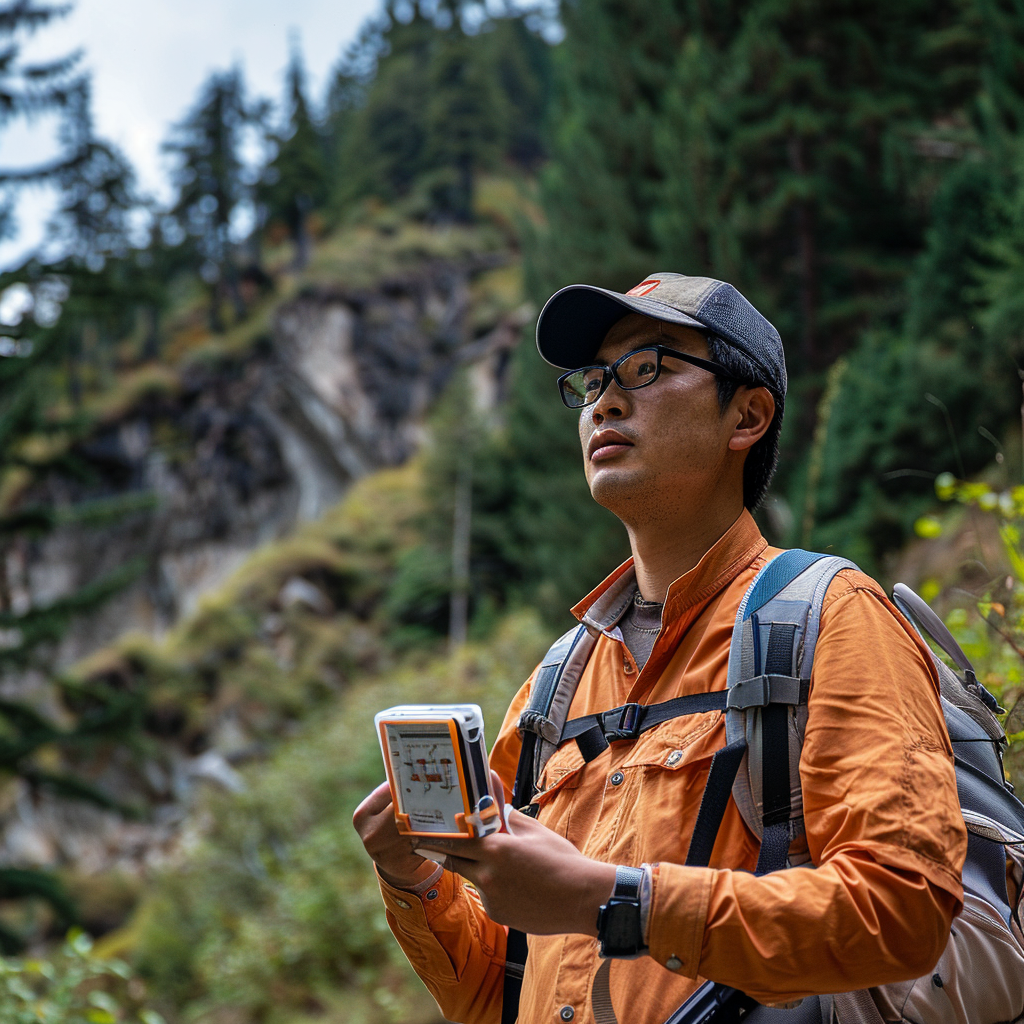
破解这一陷阱的核心,在于摒弃“肉眼判断”的误区,在森林资源资产评估阶段,加入专业的林木内部检测环节,这也是确保评估结果精准、规避亏损的必做动作。当前,行业内最科学、高效的检测方式,是“样本检测+断层扫描”结合,既能精准识别林木内部隐患,也能为每棵树建立“资产健康档案”,相当于给每棵树签发“资产健康证”,从源头杜绝“空心陷阱”。
The core of breaking this trap lies in abandoning the misconception of "visual judgment" and adding a professional internal inspection process for forest resources assets in the evaluation stage. This is also a necessary action to ensure accurate evaluation results and avoid losses. Currently, the most scientific and efficient detection method in the industry is the combination of "sample testing+fault scanning", which can accurately identify hidden dangers inside trees and establish "asset health records" for each tree, equivalent to issuing "asset health certificates" to each tree, eliminating "hollow traps" from the source.
样本检测主要针对林木的健康状况进行抽样核查,评估师选取不同区域、不同树龄的林木作为样本,通过专业仪器检测木材密度、纤维状态,判断是否存在壁腐、虫蛀等问题,样本检测的准确率可达92%以上,能快速排查出林地内的受损林木。而断层扫描则借助应力波无损检测技术,通过布置传感器收集应力波传播数据,构建林木内部结构成像图,清晰呈现树干内部的空洞、腐朽区域及受损程度,哪怕是细微的壁腐痕迹,也能精准捕捉,避免“漏判”“误判”,其检测误差可控制在5%以内。
Sample testing mainly focuses on sampling and verifying the health status of trees. Evaluators select trees from different regions and ages as samples, and use professional instruments to detect wood density and fiber status to determine whether there are problems such as wall rot and insect infestation. The accuracy of sample testing can reach over 92%, which can quickly identify damaged trees in the forest. And fault scanning uses stress wave non-destructive testing technology to collect stress wave propagation data by arranging sensors, constructing an imaging map of the internal structure of the tree, clearly showing the voids, decayed areas, and degree of damage inside the trunk. Even subtle wall rot traces can be accurately captured, avoiding "missed judgment" and "misjudgment". Its detection error can be controlled within 5%.
需要明确的是,“样本检测+断层扫描”并非额外增加的成本,而是规避巨额亏损的“防护盾”。据行业成本测算,每公顷林地的检测成本仅为评估总费用的8%,却能避免因内部隐患导致的50%以上的价值缩水,性价比极高。在森林资源资产评估中,加入这两项检测,既能精准核算林木的实际价值,避免高估资产,也能为交易双方提供客观、公正的评估依据,减少交易纠纷,守住资产安全底线。
It should be clarified that "sample testing+tomography" is not an additional cost, but a "protective shield" to avoid huge losses. According to industry cost estimates, the testing cost per hectare of forest land is only 8% of the total evaluation cost, but it can avoid more than 50% of the value reduction caused by internal hazards, making it highly cost-effective. In the assessment of forest resource assets, incorporating these two tests can not only accurately calculate the actual value of trees, avoid overestimating assets, but also provide objective and fair evaluation basis for both parties in the transaction, reduce transaction disputes, and safeguard the bottom line of asset safety.
当前,仍有不少从业者在森林资源资产评估中,为节省成本、加快进度,省略内部检测环节,仅凭肉眼观察和基础数据核算价值,最终陷入亏损困境。事实上,森林资源资产评估的核心是“精准、客观”,不仅要核算林地面积、林木长势等表面数据,更要深挖内部隐患,而“样本检测+断层扫描”,正是实现这一目标的关键手段,也是林业评估师开展专业评估的核心流程之一。
Currently, there are still many practitioners in forest resource asset assessment who, in order to save costs and accelerate progress, omit internal testing and rely solely on visual observation and basic data to calculate value, ultimately falling into a loss making predicament. In fact, the core of forest resource asset assessment is "precision and objectivity", which not only requires the calculation of surface data such as forest area and tree growth, but also delves into internal hidden dangers. "Sample testing+fault scanning" is the key means to achieve this goal, and it is also one of the core processes for forestry assessors to carry out professional assessments.
此外,在森林资源资产评估过程中,评估师还需结合检测结果,综合考量空心树、壁腐林木的影响,调整价值核算标准,避免因隐患林木导致的价值高估。同时,交易双方也应重视评估报告中的检测结论,切勿因“表面长势好”就忽视内部隐患,毕竟林地交易的核心是“实际价值”,而非“表面颜值”。
In addition, in the process of forest resource asset assessment, the appraiser also needs to combine the detection results, comprehensively consider the impact of hollow trees and wall rot trees, adjust the value accounting standards, and avoid overvaluation caused by hidden danger trees. At the same time, both parties of the transaction should also attach importance to the detection conclusions in the evaluation report, and not ignore internal hidden dangers just because the "surface growth is good". After all, the core of forest land transactions is "actual value", not "surface appearance".
综上,森林资源资产评估避坑的关键,在于看透林木“表面繁荣”背后的隐患,警惕壁腐、空心树带来的价值缩水风险。空心树混杂率超40%的“隐形亏损林”,看似优质实则亏损,而“样本检测+断层扫描”,就是破解这一陷阱的核心手段,给每棵树签发“资产健康证”,才能确保评估结果精准,避免签署“赔钱协议”。对于林地所有者、买家而言,重视森林资源资产评估中的内部检测,就是守护自身资产安全,避免因一时疏忽造成巨额亏损。关注我们,带你学习更多林木评估避坑指南,精准把控森林资产价值,守住财富底线。
In summary, the key to avoiding pitfalls in forest resource asset assessment lies in identifying the hidden dangers behind the "surface prosperity" of trees and being alert to the risk of value shrinkage caused by wall rot and hollow trees. The "invisible loss forest" with a hollow tree mixing rate of over 40% appears to be high-quality but actually loses money. "Sample testing+tomography" is the core means to break this trap, issuing "asset health certificates" to each tree to ensure accurate evaluation results and avoid signing "loss agreements". For forest owners and buyers, paying attention to internal testing in forest resource asset evaluation is to safeguard their own asset security and avoid huge losses caused by momentary negligence. Follow us to learn more about forest assessment and pit avoidance guides, accurately control the value of forest assets, and safeguard the bottom line of wealth.
本文由 森林资源评估 友情奉献.更多有关的知识请点击http://www.jyslpg.com/真诚的态度.为您提供为全面的服务.更多有关的知识我们将会陆续向大家奉献.敬请期待.
This article is contributed by the Friendship Contribution of Forest Resource Assessment For more related knowledge, please click http://www.jyslpg.com/ Sincere attitude To provide you with comprehensive services We will gradually contribute more relevant knowledge to everyone Coming soon.